
How to File Back Tax Returns
A practical guide to filing past-due tax returns — why it matters, how to get your old tax documents, how many years to file, and what happens once you do.
Free & confidential. No obligation.
This guide is for educational purposes only and does not constitute tax or legal advice. Individual results vary based on facts, income, assets, and IRS eligibility rules.
Get Your Free Tax Relief Review
A specialist will review your case and outline your options — completely free.
Get Your Free Tax Relief Review
Tell us about your situation. A specialist will contact you within 24 hours.
Get Your Free Tax Relief Review
A specialist will review your case and outline your options — completely free.
Why Filing Back Tax Returns Matters
If you have unfiled tax returns, you are not alone. Millions of Americans fall behind on filing — sometimes for one year, sometimes for many. Life events, health issues, financial hardship, or simple avoidance of an IRS problem can cause filing gaps. But unfiled returns do not go away on their own, and the consequences grow more serious the longer you wait.
The most important thing to understand is that filing late is far better than never filing at all. The IRS views a taxpayer who files — even late — more favorably than one who does not file at all. In fact, you cannot access most IRS tax relief programs — including installment agreements and Offers in Compromise — until all required returns are filed. Getting current is the essential first step in any resolution strategy.
This guide walks through why filing late matters, how to obtain the records you need, how many years back you should file, what penalties you may face, and what opportunities may still be available — including potential refunds for years within the three-year statute.
Why Filing Even Late Matters
When you do not file a required tax return, the IRS has the authority to prepare a Substitute for Return (SFR) on your behalf under Internal Revenue Code Section 6020(b). The SFR uses only information reported to the IRS by third parties — your employer, banks, and other payers. It does not include your deductions, credits, dependent exemptions, or filing status elections. As a result, an SFR almost always produces a higher tax assessment than a return you file yourself.
Beyond the inflated tax bill, failing to file creates additional problems. The IRS will not consider an Offer in Compromise, an installment agreement, or even Currently Not Collectible status if you have outstanding unfiled returns. Filing compliance is a prerequisite for every major tax resolution program. You also lose the ability to discharge tax debt in bankruptcy — tax debts are only dischargeable if the associated returns were filed at least two years before the bankruptcy petition.
Additionally, the IRS may impose the failure-to-file penalty, which is one of the most expensive penalties in the tax code — 5% of the unpaid tax per month, capped at 25% of the unpaid balance. This penalty is separate from the failure-to-pay penalty (0.5% per month, also capped at 25%), and where both apply, the failure-to-file penalty is reduced by the failure-to-pay amount, but the combined monthly charge remains at 5% until the failure-to-file cap is reached.
Perhaps most importantly, filing your returns starts the clock on the IRS Collection Statute Expiration Date (CSED). Generally, the IRS has 10 years from the date of assessment to collect a tax debt. If you never file, the IRS can assess the tax through an SFR at any time — meaning the 10-year collection clock may not start running until much later, or may not start at all for years where no SFR has been prepared. Filing your return, even late, fixes the assessment date and begins the CSED countdown.
How to Get Old W-2s, 1099s, and Income Records
One of the biggest obstacles to filing back tax returns is not having the documents you need — especially W-2s and 1099s from years past. Fortunately, the IRS maintains records of all income information reported to it by employers, banks, and other payers. These records are accessible through IRS transcripts, and obtaining them is often the first practical step in a back-filing project.
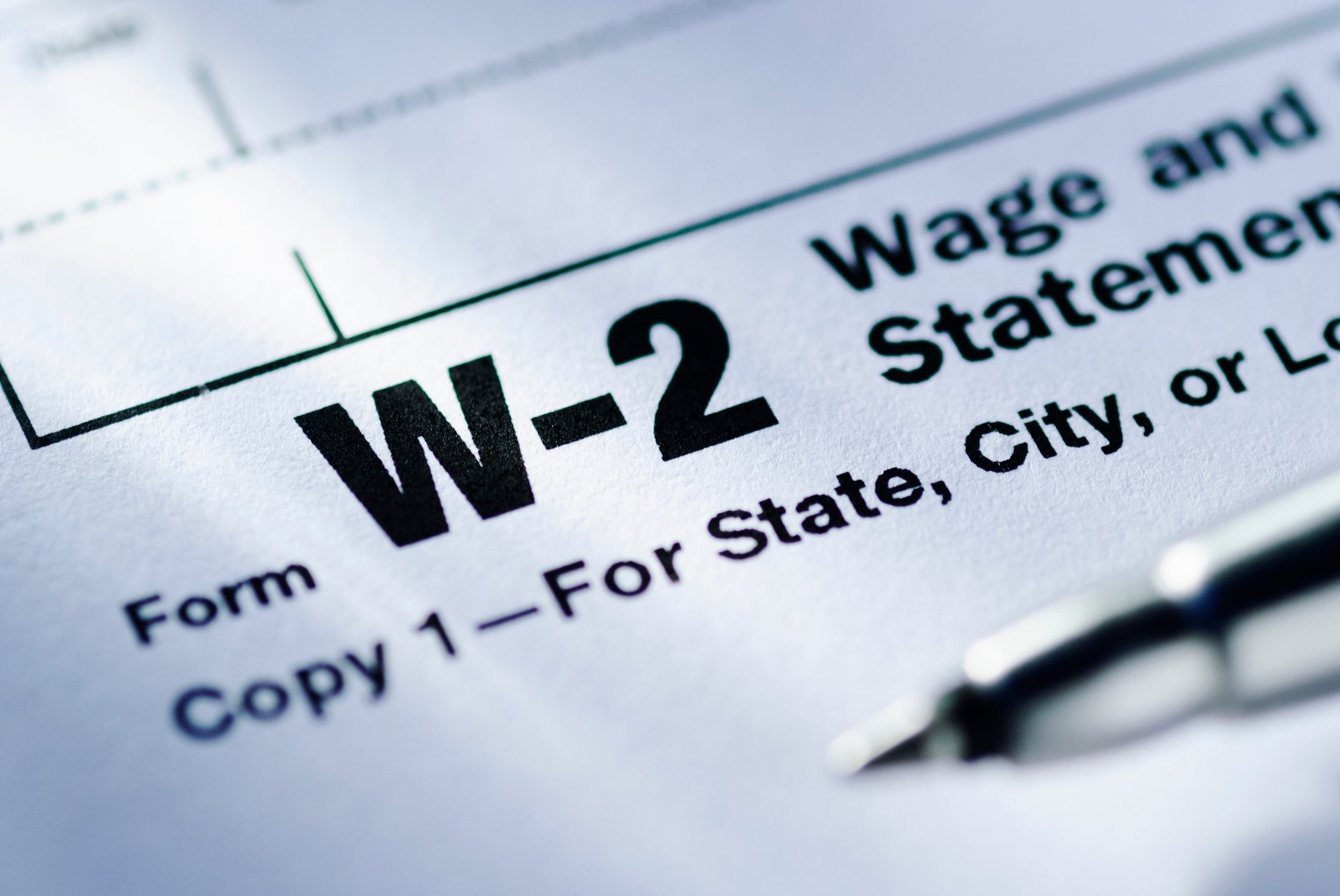
The key transcript for this purpose is the Wage and Income Transcript. This transcript lists every information return filed with the IRS under your Social Security number: W-2 wages, 1099-NEC nonemployee compensation, 1099-INT interest, 1099-DIV dividends, 1099-B brokerage proceeds, 1099-R retirement distributions, 1099-G unemployment compensation, and Social Security income (SSA-1099). It also shows federal income tax withheld, which is essential for calculating whether you owe or are due a refund.
You can request Wage and Income Transcripts in several ways. The fastest method is through the IRS online portal at IRS.gov, where you can view and download transcripts immediately after identity verification. You may also request transcripts by mail using Form 4506-T (Request for Transcript of Tax Return), checking box 8 for the Wage and Income Transcript. Phone requests are available through the IRS automated system at 800-908-9946. Most transcripts are available for the current year plus the prior nine years, though the IRS may retain certain records for longer.
If the transcript is incomplete or you need records older than nine years, you may also contact former employers directly, request copies of old bank statements, or contact the Social Security Administration for a detailed earnings statement (Form SSA-7050). Mortgage lenders or loan servicers may also retain copies of tax returns you submitted as part of a loan application, which can serve as a starting point for reconstructing older returns.
How Many Years Back Should You File?
The IRS generally requires taxpayers to file returns for the current year plus the prior six years to be considered compliant for most collection resolution purposes. This is often referred to as the "six-year rule." However, the exact number of years you need to file depends on your specific situation and what resolution program you are pursuing.
For an Offer in Compromise, the IRS typically requires that all returns be filed for periods in which you had a filing requirement — which could extend beyond six years if the IRS has reason to believe you had income in earlier years. For installment agreements, the IRS generally looks at the current year plus the prior five or six years. If you are currently under audit or examination, the IRS may request returns for the specific years under review regardless of how far back they go.
A strategic consideration involves potential refunds. Under IRC Section 6511, you generally have three years from the original due date of the return (including extensions) to claim a refund. For example, if your 2022 return was due on April 15, 2023, you have until approximately April 15, 2026, to file and claim any refund for that year. After the three-year window closes, any overpayment is forfeited to the Treasury. If you had withholding or estimated tax payments for a year that passed the refund statute, those amounts cannot be recovered.
A tax professional reviewing your Wage and Income transcripts can identify which years show withholding that might entitle you to a refund and prioritize those filings accordingly. In many cases, filing older returns with refunds may offset balances due for other years, reducing your overall tax debt.
What to Expect When Filing Multiple Years at Once
Filing multiple years of back tax returns is a project, not a single afternoon task. It requires organization, patience, and — in many cases — professional guidance. Here is what the process typically involves.
First, you will need to gather or request your Wage and Income transcripts for each unfiled year. This gives you the raw data needed to prepare each return. You may also need receipts or records for deductible expenses, child care costs, education expenses, mortgage interest (Form 1098), and other items that reduce your taxable income. If you are self-employed, you will need income records and business expense documentation for each year.
Each year's return must be prepared on the correct form for that tax year. The IRS publishes prior-year forms and instructions on its website dating back approximately 10 years. Tax preparation software can handle prior-year returns, though many consumer products limit how far back they support. A tax professional typically has access to prior-year tax software and can prepare returns for any year with available forms.
Once prepared, each return must be filed separately — you cannot combine multiple years on a single form. The IRS processes each return independently, though it typically processes them in the order received. Returns claiming refunds may take longer to process if the IRS cross-checks the refund claim against its records. Returns with balances due will generate separate notices and separate assessment dates, and each year's balance will have its own Collection Statute Expiration Date.
After all returns are filed and assessed, you and the IRS have a complete picture of your total tax debt. At that point, you can explore resolution options — an installment agreement covering all years, an Offer in Compromise, penalty abatement requests for specific years, or Currently Not Collectible status if you cannot afford to pay. Filing the returns is the gateway to every one of these programs.
Understanding Penalties: Failure-to-File vs. Failure-to-Pay
When you file late and owe tax, two separate penalties may apply, and understanding how they interact is important for estimating your total liability.
The failure-to-file penalty (IRC Section 6651(a)(1)) is 5% of the unpaid tax for each month or part of a month the return is late, capped at 25% of the unpaid tax. This penalty begins accruing the day after the return due date. If the return is more than 60 days late, the minimum penalty is the lesser of $485 (adjusted for inflation) or 100% of the unpaid tax. This penalty is substantially more expensive than the failure-to-pay penalty, which is one reason why filing — even without payment — is better than not filing at all.
The failure-to-pay penalty (IRC Section 6651(a)(2)) is 0.5% of the unpaid tax for each month or part of a month the tax remains unpaid, also capped at 25%. This penalty starts after the due date and continues until the tax is paid or the cap is reached. For any month both penalties apply, the failure-to-file penalty is reduced by the failure-to-pay penalty amount, so the combined monthly rate remains at 5% rather than 5.5%.
In addition to these penalties, interest accrues on the unpaid tax and penalties from the original due date. The IRS interest rate is the federal short-term rate plus 3%, compounded daily, and the rate adjusts quarterly. Interest cannot be abated unless the underlying tax is abated.
There is good news: if you have a clean compliance history — meaning no penalties for the prior three tax years — you may qualify for First Time Abatement (FTA) of the failure-to-file, failure-to-pay, or failure-to-deposit penalties for a single tax year. This is an administrative waiver the IRS grants by phone or written request, and it can significantly reduce your total balance. Reasonable cause abatement may also apply if you faced circumstances beyond your control, such as serious illness, natural disaster, or reliance on incorrect professional advice.
Getting Current: The Prerequisite for Tax Resolution
Filing all past-due returns is not optional if you want to resolve your IRS tax debt. The IRS requires full filing compliance as a condition of entering into an installment agreement, submitting an Offer in Compromise, or being placed in Currently Not Collectible status. Until every required return is filed and processed, most resolution doors remain closed.
For an installment agreement, the IRS will typically require you to file all returns for the current year plus the prior five or six years before approving a payment plan. For an Offer in Compromise, the compliance requirement is broader — you must have filed all returns you were required to file for any year, and you must remain in compliance for at least five years after the offer is accepted, filing and paying on time going forward.
Once your returns are filed and assessed, a tax professional can analyze your full financial picture — total debt, CSED for each year, penalty abatement opportunities, and which resolution program offers the best path forward. Many taxpayers are surprised to find that once all returns are filed, some years show refunds or small balances, and the overall debt picture is more manageable than anticipated.
The key is not to let the fear of what you owe keep you from filing. The IRS already knows about your income — employers and payers report it. Filing your return lets you claim the deductions, credits, and filing status that reduce your tax and gives you access to the full range of resolution programs. It is the single most important step you can take toward resolving your tax situation.
Step-by-Step Back Filing Checklist
Need Help Filing Back Tax Returns?
Our team can reconstruct your income, prepare prior-year returns accurately, and negotiate the best possible resolution with the IRS.
Get Back Tax HelpNeed Help Filing Back Tax Returns?
Filing multiple years of back tax returns can be overwhelming. Our team can help you gather records, prepare prior-year returns, and build a resolution strategy once you are current. Free consultation, no obligation, fully confidential.
New Beginning Tax Solutions is a private tax resolution company and is not affiliated with the IRS or any government agency. This article is for educational purposes only and does not constitute tax or legal advice. Results vary based on individual facts, income, assets, tax history, and IRS eligibility rules.