
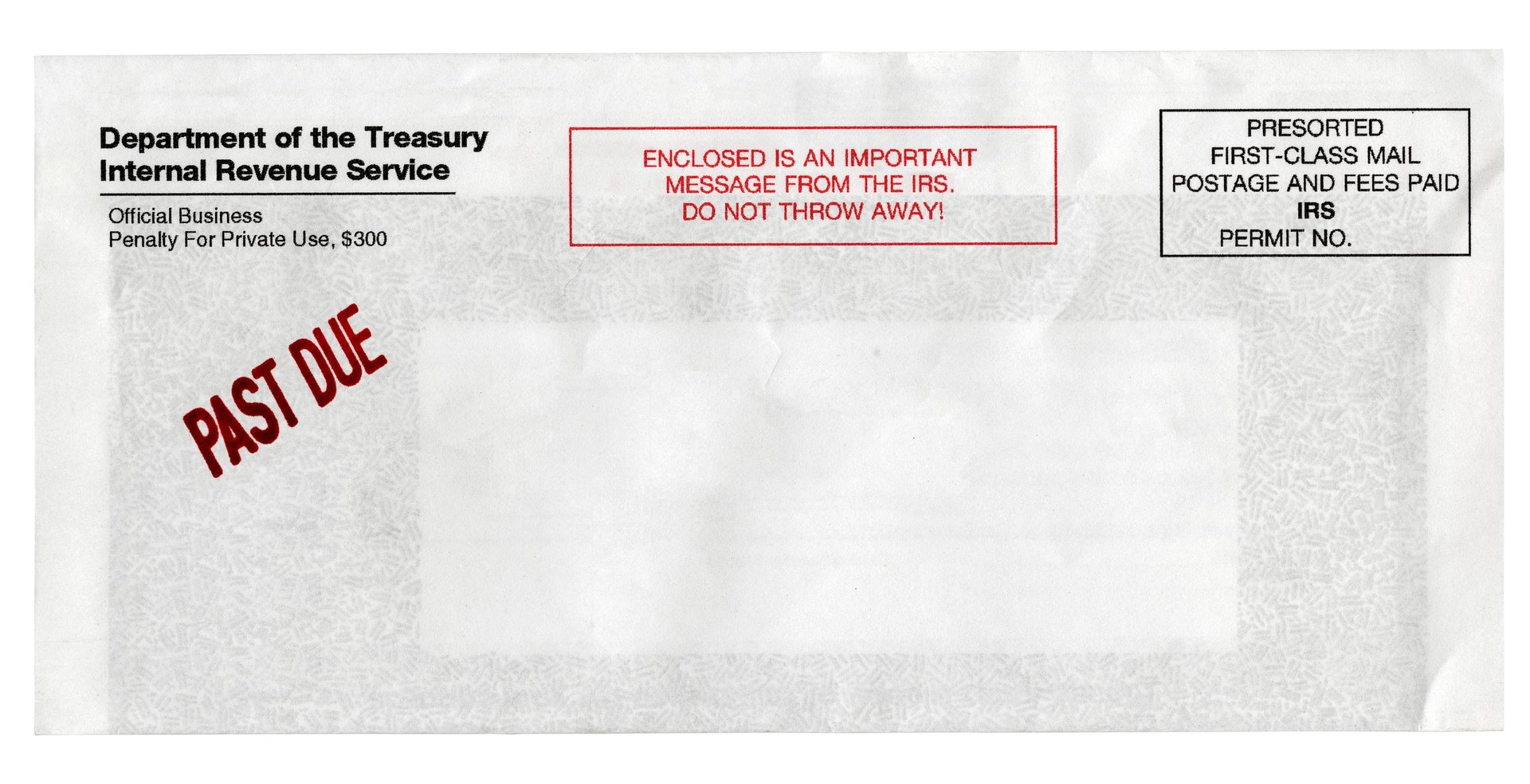
It starts with a letter. Maybe you set it aside, unsure what it meant. Perhaps you told yourself you would deal with it next week. Weeks turn into months, and the stack of IRS correspondence grows thicker on your kitchen counter. That impulse to avoid the problem is deeply human — but when it comes to the IRS, silence is never a strategy. The Internal Revenue Service has one of the most methodical, automated, and relentless collection systems in the federal government. This article walks through exactly what happens when IRS notices go unanswered, step by step, so you can understand the stakes and take action before the consequences become severe.
The IRS Notice Escalation Timeline
The IRS does not jump straight to aggressive collection. It follows a legally prescribed sequence of notices, each one escalating the urgency and the consequences. Understanding this timeline helps you recognize where you stand and what comes next.
CP14 — Balance Due Notice
The first formal notice. It states the amount owed, the tax period in question, and the due date. At this stage, the IRS is simply asking for payment. Interest and failure-to-pay penalties have already begun accruing, but no enforced collection action has started. Many taxpayers ignore this notice, assuming it is a mistake, or they set it aside without reading it fully.
CP501 — Reminder Notice
Sent roughly 5-6 weeks after the CP14. The language is slightly more urgent, but no new penalties have been added beyond the ongoing interest and monthly failure-to-pay penalty. The IRS is giving you one more chance to respond voluntarily.
CP503 — Second Reminder
Another 5-6 weeks pass. The tone sharpens. The notice warns that the IRS may take enforcement action if the balance remains unpaid. At this point, the IRS has sent three notices over roughly four months. The window for a quiet resolution is closing.
CP504 — Notice of Intent to Levy
This is the turning point. The CP504 (or its equivalent, the LT11 for individual taxpayers) is a formal "Notice of Intent to Levy." It means the IRS is legally preparing to seize your assets — bank accounts, wages, Social Security benefits, and other property — unless you pay in full or enter into a collection agreement within 30 days. Many people are shocked to receive this letter, but the IRS has been building toward it for months.
LT11 / LT1058 — Final Notice of Intent to Levy and Your Right to a Hearing
This is the final notice before levy action. It includes IRS Publication 594 (The IRS Collection Process) and, critically, Form 12153 — the request for a Collection Due Process hearing. You have 30 days from the date of this notice to request a CDP hearing and preserve your right to appeal in Tax Court. Missing this 30-day window means losing that right, though you may still qualify for an Equivalent Hearing within one year.
The entire escalation sequence from CP14 to LT11 typically spans six to nine months, though the IRS can move faster or slower depending on its workload and the size of the balance. The key takeaway: you do not wake up one morning to a frozen bank account without warning. The IRS sends multiple notices. Ignoring them is what converts a manageable tax debt into a collection crisis.
Interest and Penalties: The Mounting Cost of Inaction
One of the most painful consequences of ignoring the IRS is the compounding financial damage. Tax debt does not sit still. It grows — and the growth is mandated by federal law, not subject to negotiation or hardship waivers in most cases.
The IRS charges interest on unpaid tax from the date the return was due, regardless of extensions. The interest rate is the federal short-term rate plus 3%, compounded daily, and it adjusts quarterly. For individuals, the rate has hovered between 7% and 8% in recent quarters — significantly higher than most consumer debt.
On top of interest, there are two major penalties:
- Failure-to-File Penalty: 5% of the unpaid tax per month or partial month, capped at 25%. If you file more than 60 days late, the minimum penalty is the smaller of $485 (adjusted for inflation) or 100% of the tax due. This penalty alone can add thousands to a modest balance.
- Failure-to-Pay Penalty: 0.5% of the unpaid tax per month, also capped at 25%. When both penalties apply in the same month, the failure-to-file penalty is reduced by the failure-to-pay amount, so the combined monthly cap is 5%.
Consider a realistic scenario: you owe $15,000 in federal income tax for 2022 and you neither file a return nor pay. After 12 months, the combined failure-to-file and failure-to-pay penalties could add roughly $9,000 — an additional 60% on top of the original tax. Add interest, and the total could exceed $26,000. And that is before any enforcement action costs, such as lien filing fees or levy processing fees.
The IRS does have a first-time penalty abatement (FTA) policy that may waive certain penalties for taxpayers with a clean compliance history for the preceding three years. However, FTA is discretionary, not automatic, and it only covers failure-to-file and failure-to-pay penalties — not interest. The sooner you address the debt, the fewer penalties you accumulate and the better your chances of qualifying for abatement.
The Federal Tax Lien: A Public Claim Against Everything You Own
Once the IRS assesses a tax liability and sends notice and demand for payment, a federal tax lien arises automatically by operation of law under Internal Revenue Code Section 6321. This lien attaches to all property and rights to property you own — real estate, bank accounts, vehicles, business assets, accounts receivable, and even future property you acquire while the lien is in effect.
The lien itself is not public at first. It becomes public when the IRS files a Notice of Federal Tax Lien (NFTL) with the county recorder or secretary of state. The NFTL is a public document that appears on your credit report, alerts creditors to the government's claim, and can effectively freeze your ability to sell real estate, refinance a mortgage, or obtain new credit.
The impact on credit is often severe. A federal tax lien is one of the most damaging items that can appear on a credit report. While the three major credit bureaus removed most tax liens from consumer credit reports in 2017-2018 under a settlement with state attorneys general, the lien still shows up in public records searches, title reports, and business credit reports. Lenders, employers, and landlords who run comprehensive background checks will find it.
The lien also has a practical effect on property transactions. If you try to sell a home with a federal tax lien in place, the title company will discover it and the sale cannot close until the lien is addressed — either paid in full, subordinated, or discharged. In many cases, the IRS lien survives bankruptcy, meaning even a Chapter 7 discharge may not wipe it out if the underlying tax is non-dischargeable.
Bank Levies, Wage Garnishments, and Asset Seizure
If you reach the levy stage without resolving the debt, the IRS has broad legal authority to take collection action without first obtaining a court judgment — a power that sets it apart from nearly every other creditor in the United States.
A bank levy (Form 668-A) is served directly on your financial institution. The bank is required by law to freeze the funds in your account up to the amount of the levy, hold them for 21 days, and then remit them to the IRS. This happens without a court order and without prior notice beyond the LT11 or CP504 that was sent weeks earlier. The 21-day holding period exists to give the bank time to identify exempt funds — such as certain Social Security or veterans' benefits — but beyond those narrow protections, the money is gone.
A wage garnishment (Form 668-W) is served on your employer. Unlike a bank levy, which takes the entire balance at once, a wage levy is continuous — it takes a portion of every paycheck until the debt is satisfied or the levy is released. The amount the IRS can take depends on your filing status and number of dependents, calculated using the IRS exemption tables. The exempt amount is based on the standard deduction and personal exemptions, and for many taxpayers the levy can consume a substantial portion of take-home pay.
Beyond bank accounts and wages, the IRS can seize physical assets: vehicles, real estate, business equipment, and even retirement accounts. While the IRS generally does not seize a primary residence except in cases of large balances or flagrant noncompliance, the legal authority exists. The IRS may also levy federal payments, including Social Security benefits (subject to a 15% levy under the Federal Payment Levy Program), contractor payments, and tax refunds.
Substitute for Return (SFR) and the Danger of Letting the IRS File for You
If you do not file a required tax return, the IRS has the authority under IRC Section 6020(b) to prepare a return on your behalf, known as a Substitute for Return (SFR). This is not a favor. An SFR is prepared based on the information the IRS has — W-2s, 1099s, and other third-party information returns — using the filing status that produces the highest tax liability (usually single or married filing separately) and allowing only the standard deduction. No dependents, no itemized deductions, no credits.
The result is almost always a tax bill that is substantially higher than what you would owe if you filed a proper return yourself. Once the SFR is processed and the tax is assessed, the IRS can begin collection — including liens and levies — even though you never signed a return. And while you can later file your own original return to replace the SFR, the process can take months and the assessed liability may already have triggered collection actions.
Critically, tax assessed through an SFR may be harder to discharge in bankruptcy, because the taxpayer did not file a return — one of the requirements for dischargeability under the Bankruptcy Code. Filing your own returns, even if you cannot pay, is always better than letting the IRS do it for you.
Passport Revocation and the CSED: The Long-Term Stakes
Under the Fixing America's Surface Transportation (FAST) Act, enacted in 2015, the IRS is required to notify the State Department when a taxpayer has a "seriously delinquent tax debt" — defined as an assessed balance exceeding a statutory threshold (adjusted annually for inflation; $59,000 for 2024) for which a notice of federal tax lien has been filed and the collection due process rights have been exhausted or lapsed. The State Department can then deny a passport application or revoke an existing passport.
Passport revocation is not theoretical. The IRS began certifying delinquent taxpayers to the State Department in 2018, and thousands of certifications have been made. If you travel internationally for work, to visit family, or for any other reason, an unresolved tax debt above the threshold could ground you.
There is, however, a limit on the IRS's collection clock: the Collection Statute Expiration Date (CSED). Under IRC Section 6502, the IRS generally has 10 years from the date of assessment to collect a tax debt. After the CSED passes, the IRS can no longer legally collect, and the lien is released. But that 10-year window is long, and several actions can extend or suspend it — including filing for an Offer in Compromise, requesting a Collection Due Process hearing, or filing bankruptcy. Many taxpayers assume time will solve the problem. In practice, the IRS is efficient at collecting within the 10-year period, and the intervening years of levy risk, lien damage, and financial stress are a high price to pay.
The bottom line is this: the passage of time works against you, not for you. The sooner you engage, the more options you have.
Behind on Filing? Let's Fix It Before the IRS Acts
The longer you wait, the fewer options you have. Get current on unfiled returns and stop IRS escalation.
File Your Back Tax ReturnsDon't Wait for the Next Notice
Every day that passes adds interest, penalties, and risk to your tax situation. A free, confidential consultation with our team can help you understand your options and stop IRS collection action.
Get Your Free Tax Relief ReviewNew Beginning Tax Solutions is a private tax resolution company and is not affiliated with the IRS or any government agency. This article is for educational purposes only and does not constitute tax or legal advice. Results vary based on individual facts, income, assets, tax history, and IRS eligibility rules.